
Home › Resources › Sales Pipeline Template
The sales pipeline template that tells you the truth
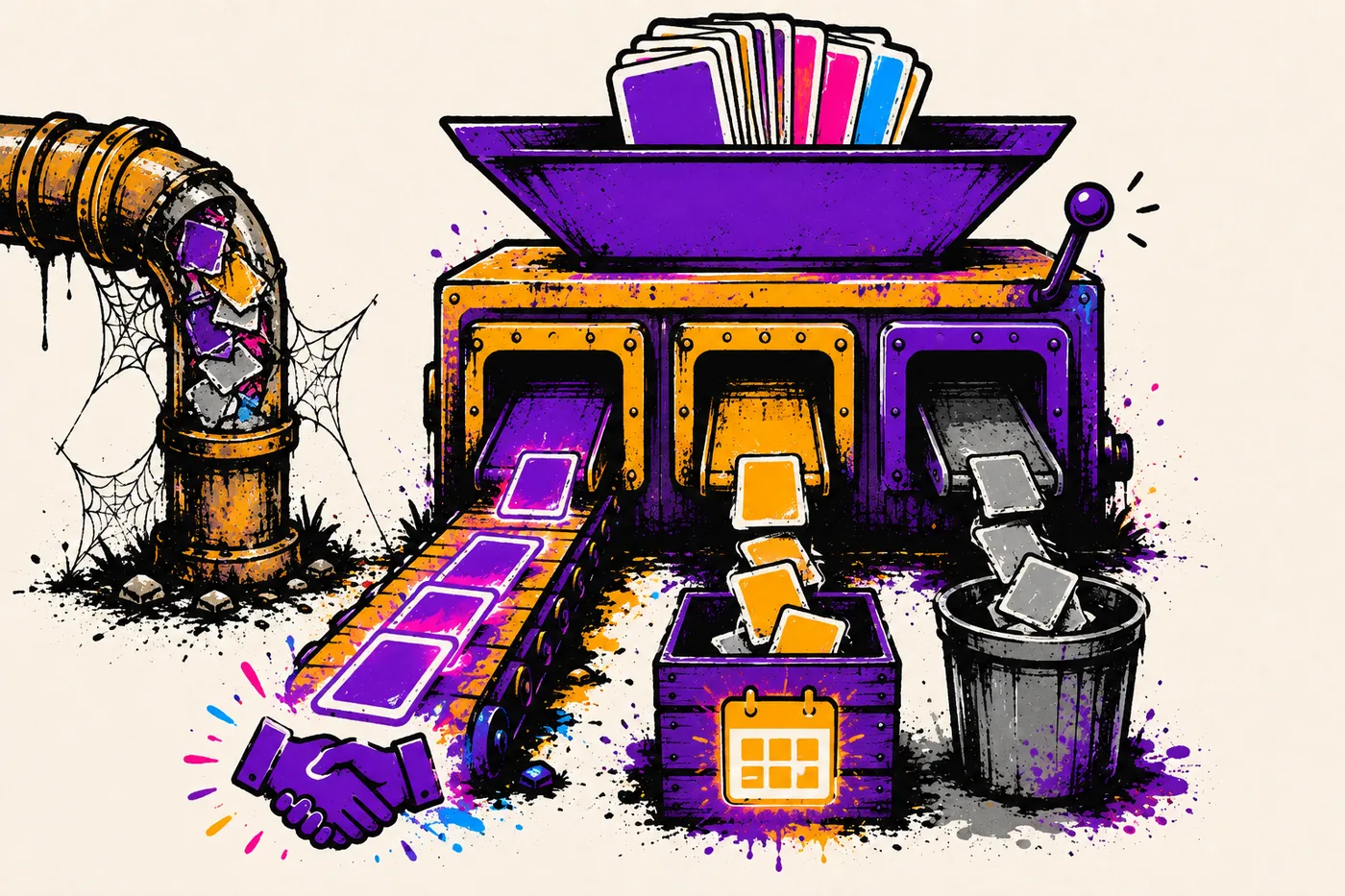
Every pipeline template on the internet has the same hole
Search this keyword and you'll find sixteen near-identical spreadsheets from CRM companies: deal name, stage, close date, win probability, weighted forecast. All of them exist to warm you up for a software trial, and none of them answer the actual question, which is not "where do I write deals down?" but "how do I tell which of these deals are real?"
I checked the top five ranking templates properly. Not one contains a review ritual. Not one gives you a question to ask of a deal. Not one has kill criteria: in every template on page one, a deal can only progress or quietly rot. And most lean on a "win probability %" column, which for an owner running fifteen conversations on gut feel is theatre: a made-up number multiplied by a hopeful one.
Twelve years on the phones taught me that the pipeline isn't the spreadsheet. It's the habit of looking at it honestly, once a week, and acting on what you see. So that's what this template is.
What's actually in it
- The one-page pipeline: six plain-English stages (Leads, Contacted, Discovery call, Proposal, Won/Lost, Nurture), with the two columns that actually fight deal-rot: "they last responded" and "next step, with a date".
- No probability column, on purpose. A next step with a date is the only forecast a small pipeline needs.
- The weekly 15-minute review: the honesty pass, the big-three check (pain, urgency, budget), and the warmest-first ranking.
- Kill and park criteria: the exit every other template forgets, so quiet deals go to Nurture with a diary date instead of haunting your Mondays.
- The one number that tells you pipeline health at a glance, plus a weekly log that saves in your browser.
The fifteen minutes, shown once
Here's the heart of it: the honesty pass. Take any deal on your list and answer two questions with dates, not feelings. When did THEY last respond (not when you last chased)? And what's the agreed next step, with a date on it? Try it now on the deal you feel best about. If the answers are "six weeks ago" and "erm", you don't have a deal, you have a hope wearing a deal's clothes. The template does that to every row, weekly, in about fifteen minutes, and then tells you what to do with what you find: push it, park it to Nurture with a date, or close it kindly and stop haunting them.
That's the whole trick. Deals fail the honest questions long before they fail in reality, and catching it early is what gets your follow-up going to the right people. On that subject: forget the "80 percent of sales take five follow-ups" statistic doing the rounds (it traces to a survey of fewer than 40 people, taken in 1942). The real modern figure, from RAIN Group's study of 489 sellers, is around 8 direct touches to earn a first meeting. Mixed formats, spaced out, each one useful. The template's Nurture stage is where that happens without you turning into a pest.
Yours for an email
Get the Pipeline Review Template
Drop your email and it unlocks instantly (and lands in your inbox too, so you can find it again). No card, no trial, no CRM waiting behind it: there's nothing for sale on this whole site.
- The one-page pipeline, fills in on the page
- Six plain-English stages, no jargon
- The weekly 15-minute review ritual
- Kill/park criteria and the one health number
Where should the template go?
You'll also get G's Marketing Letters: one short, useful letter every weekday, nothing for sale. Unsubscribe any time. Privacy.
Fair questions
Is the sales pipeline template really free?
Yes. The whole thing for an email address: the one-page pipeline and the weekly review ritual. You also get G’s Marketing Letters (one short marketing letter every weekday, nothing for sale) and you can unsubscribe any time without losing the template.
What stages should a sales pipeline have?
Six, in plain English: Leads (not yet contacted), Contacted (attempt made, dates logged), Discovery call, Proposal, Closed won or lost, and Nurture for the real-but-not-now conversations. That flow tracks every deal a small business has without a single piece of jargon, and it’s the flow this template uses.
How often should I review my sales pipeline?
Weekly, in a defended fifteen-minute slot, plus a two-minute daily glance at yesterday’s conversations. Harvard Business Review research found companies that combined a defined process with regular pipeline attention grew 28 percent faster. Quarterly clear-outs are where deals go to rot politely.
How many follow-ups before I give up on a lead?
Ignore the famous statistics (the “80 percent of sales need five follow-ups” line traces back to a 1942 survey of under 40 people). Modern research from RAIN Group across 489 sellers found it takes around 8 direct touches to earn a first meeting. Mix the formats: calls, email, LinkedIn, something genuinely useful. Then park quiet deals into Nurture rather than deleting them, and let your content keep you remembered.
Do I need a CRM for this?
Not at small-business scale. Fifteen live conversations fit on one honest page, and a CRM you don’t update is just a subscription with guilt attached. Graduate to one when you have a second salesperson or the page genuinely overflows.
Pipeline's only half the job. Filling it is the other half: read the B2B lead generation guide for small businesses, or work out what a good month needs to look like with the Pipeline Calculator.